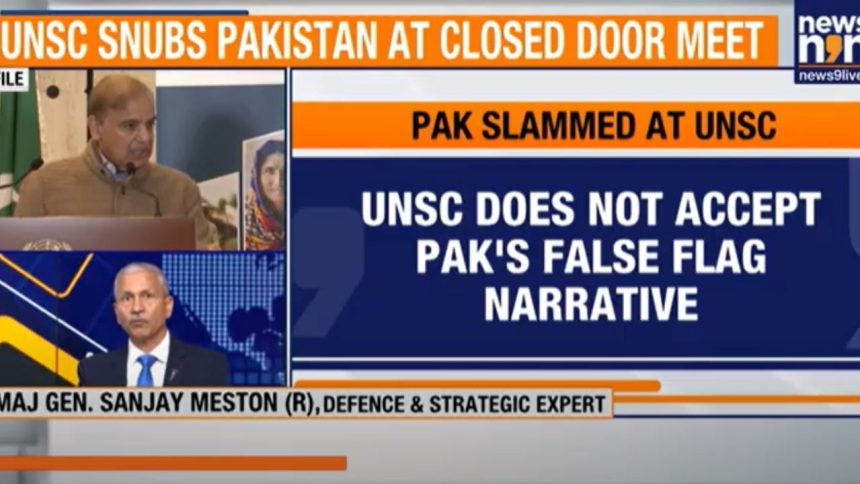
New Delhi: The United Nations Security Council (UNSC) convened a closed-door consultation to address rising tensions between India and Pakistan following a devastating terror attack in Pahalgam, India. The attack resulted in the tragic deaths of 26 individuals, including 25 tourists and a Kashmiri pony ride operator. The UNSC’s response was a strong condemnation of Pakistan’s role in the incident, specifically citing the involvement of the Pakistan-based terrorist group, Lashkar-e-Taiba (LeT).
During the consultation, UNSC members directly questioned Pakistani officials about LeTs participation in the attack. Pakistan’s attempts to frame the event as a “false flag” operation were swiftly rejected. The UNSC members highlighted the urgency of holding those responsible accountable for the violence. Reports indicate that the tourists were specifically targeted due to their religious affiliation.
Beyond the immediate aftermath of the Pahalgam attack, the UNSC also expressed grave concerns about Pakistan’s recent actions. Pakistan’s increasingly aggressive nuclear rhetoric and recent missile tests were identified as significant escalatory factors in the already volatile region. These actions, coupled with the Pahalgam attack, significantly heightened tensions between India and Pakistan.


The UNSC, composed of five permanent members (China, France, Russia, the United Kingdom, and the United States) and ten non-permanent members (including Pakistan, Algeria, Denmark, Greece, Guyana, Panama, South Korea, Sierra Leone, Slovenia, and Somalia), underscored the need for bilateral dialogue to resolve disputes.
The council’s firm stance against Pakistan’s actions reflects the international community’s disapproval of state-sponsored terrorism and the escalation of tensions through aggressive rhetoric and military posturing. The outcome of this consultation emphasises the severity of the situation and the international pressure on Pakistan to address its role in regional instability.