History is not only what is written — it is also what remains hidden. In the grand retelling of India’s independence, the limelight was hogged by a select few. But there were some, who walked the backlanes of the freedom struggle, asking nothing in return.
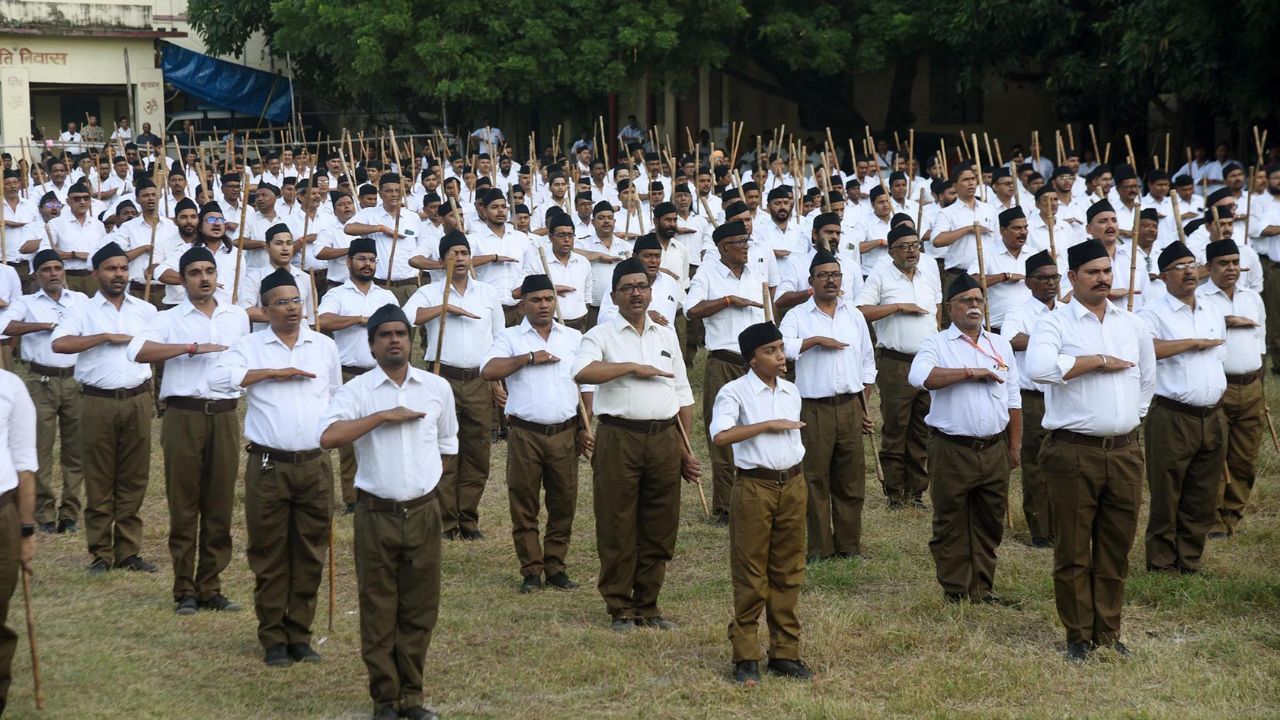
Among them there were thousands of swayamsevaks of the Rashtriya Swayamsevak Sangh (RSS) — disciplined, devoted, and determined — who etched sacrifice into the soil and were everywhere the nation bled. As India marks its 79th Independence Day, it is only fitting to revisit the RSS’s contribution to the nation’s struggle for freedom.
The RSS swayamsevaks, who believed in silent sacrifice, fought not only the British Empire but also the deeper malaise of self-doubt that colonialism had sown. Yet, their sacrifices were deliberately erased from the story of India’s freedom struggle, thanks to the the Left-leaning historians.


RSS founder in freedom movement
Even before the formal establishment of the RSS in 1925, its founder Dr. Keshav Baliram Hedgewar was an active freedom fighter, forged in the furnace of the independence movement.
Exactly nine years before the Congress declared its resolve for complete independence, Dr. Hedgewar, serving as the joint secretary of the Nagpur unit of the party in 1920, had presented a resolution demanding Purna Swaraj. The proposed resolution stated, “The goal of the Congress is to achieve complete freedom, establish an Indian republic, and liberate other nations of the world from the exploitation and atrocities of capitalist imperialism.”
During the Non-Cooperation Movement, Dr. Hedgewar’s speeches carried such fervour that the then District Collector of Nagpur, Cyril James Irwin, issued a notice banning him from public speaking for a year. Undeterred, Hedgewar’s written defence blazed even brighter — so much so that Judge Smelly remarked, “His statement of defence is more seditious than his speech.” The court sentenced him to one year’s imprisonment.
Upon his release from jail, Dr. Hedgewar made a profound declaration: “Political independence would be meaningless without moral, cultural, and civilisational unity.” It was with this conviction that he founded the Rashtriya Swayamsevak Sangh in 1925, to give shape and strength to that idea.
How RSS invigorated freedom movement
In 1929, the All India Congress Committee’s historic Lahore Conference adopted the resolution for complete independence. Responding to this momentous decision, Dr. Hedgewar issued a message to all RSS shakhas, declaring, “We are delighted that the AICC has now articulated its goal with such clarity. It is, therefore, our duty to support and cooperate with this organisation — this is but natural.”
When Mahatma Gandhi launched the Civil Disobedience Movement in 1930, Dr. Hedgewar chose to take active part in the satyagraha. Setting aside his responsibilities as RSS Sarsanghchalak, he entrusted the interim charge to Dr. LV Paranjape.
Dr. Paranjape told the swayamsevaks, “Those who wish to participate in the agitation must do so. Others should work for this young organisation. The real work is to organise people who will give their lives for the freedom of this nation.”
Before leaving to participate in the satyagraha at Yavatmal, Dr. Hedgewar, while addressing hundreds of swayamsevaks in Nagpur, said, “Please do not be under the impression that this current agitation is the last battle for independence. The real battle will start after this, and be ready to jump into this coming battle fully prepared to sacrifice your all. We are taking part in this satyagraha because we believe that this will take us one more step towards independence.”
Hedgewar was sentenced to nine months of rigorous imprisonment and confined in Aloka Jail, where hundreds of swayamsevaks shared his captivity. Among them, eleven RSS swayamsevaks were each awarded four-month rigorous imprisonment.
The Sangh’s steadfast anti-British stance soon caught the eye of the colonial authorities. A report by the Central Provinces & Berar Police observed that Dr. Hedgewar’s participation had “injected fresh vigour” into the Civil Disobedience Movement.
Countless RSS swayamsevaks took active part in the Civil Disobedience Movement, while many others extended quiet, steadfast support. In cities such as Nagpur, Wardha, Pune, and Lahore, RSS shakhas organised secret drills and study circles, training swayamsevaks in self-defence and community mobilisation — all to infuse fresh energy into the freedom movement.
Many RSS swayamsevaks were quietly engaged in disseminating banned nationalist literature, aiding revolutionaries in evading police surveillance, and maintaining supply chains of food and information during periods of intense crackdown. Among them was Laxmanrao Bhide, one of the early pracharaks of the Sangh, who worked in close coordination with the revolutionaries and endured repeated harassment at the hands of the British Police.
RSS and Quit India Movement
When the Congress leadership was jailed en masse during the Quit India Movement of 1942, RSS swayamsevaks stepped forward to maintain public order, extend relief to the distressed, and stand firm against British repression. Many of the swayamsevaks paid the price with arrest and imprisonment.
In Maharashtra’s Satara, swayamsevaks built clandestine networks to aid the revolutionaries. In Vidarbha, they risked imprisonment by circulating Gandhi’s proscribed speeches. In Chimur and Ashti, RSS cadres took the lead in Congress processions, transforming them into fierce uprisings, and stormed police stations. Across Bengal, Punjab, and Bihar, they opened their doors to shelter freedom fighters fleeing the relentless British raids.
In a 1942 letter, prominent Congress leader Acharya Kripalani highlighted the steadfast spirit of the RSS swayamsevaks during those turbulent days, writing, “RSS volunteers worked selflessly when the Congress was under suppression.”
Even British intelligence reports from that era admitted the rise of the “RSS menace” — a force that was ideologically committed, deeply disciplined, and impossible to infiltrate.
Azad Hind Fauj: Swayamsevaks were there too
Many swayamsevaks were drawn to the Azad Hind Fauj, seeing in Netaji Subhas Chandra Bose the very essence of uncompromising patriotism. Across towns and villages, countless swayamsevaks quietly lent their support to INA recruiters, arranging meetings, passing messages, offering shelter and working in silence for a cause that thundered in their hearts.
Partition Horror: When Swayamsevaks turned Saviours
When the Partition of 1947 tore through India, it left not only a divided nation but also a paralysed state machinery. Into this void stepped thousands of RSS swayamsevaks, becoming the unflinching wall between marauding mobs and defenceless refugees.
In Punjab, Bengal, and Sindh, RSS volunteers shielded Hindu families, led refugee caravans to safety, and confronted armed assailants with nothing but bamboo sticks and their bare hands.
In Delhi, they established over 300 relief camps, tending to the wounded, feeding the hungry, and braving “no-go zones” for rescue operations. They guarded incoming trains from Lahore, administered first aid, and physically defended desperate families amid the blood and chaos of the riots.
A refugee from Lahore, now long gone, once recalled to Organiser weekly, “I did not know what the RSS was. All I knew was that men in khaki saved my daughter when the police refused to come.”
Even official records bear testimony. The report of Lt. Colonel SK Sinha noted unequivocally, “It was the RSS cadres who protected Hindu refugees during Partition, even when the Army was not available.”
A 1948 editorial in The Statesman observed with rare candour: “Without the silent service of those young men in khaki, Delhi would have seen far greater bloodshed.”
Unsung, Unbowed, Unbreakable
The RSS swayamsevaks stood as the night watchmen of a wounded civilisation — guarding its flickering flame when storms threatened to snuff it out. They mended the torn fabric of the nation, not for applause, but to keep Bharat’s soul intact.
Ignored by historographers, their story is etched not in textbooks but in the hearts of those they saved — from the narrow lanes of Kolkata to the crowded refugee camps of Delhi. Even today, their legacy breathes: in the swayamsevak who wades through floodwaters to rescue strangers, in the youth who gathers at a shakha before sunrise. For them, Bharat Mata’s blessing was reward enough — and it still is.