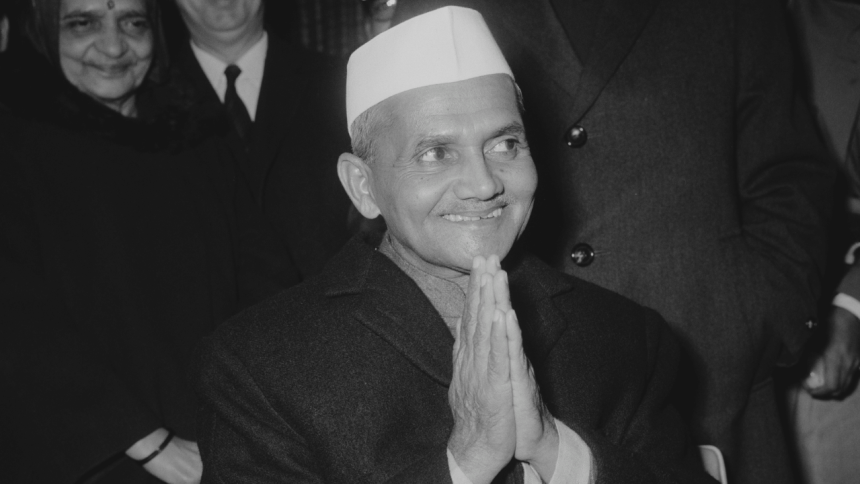
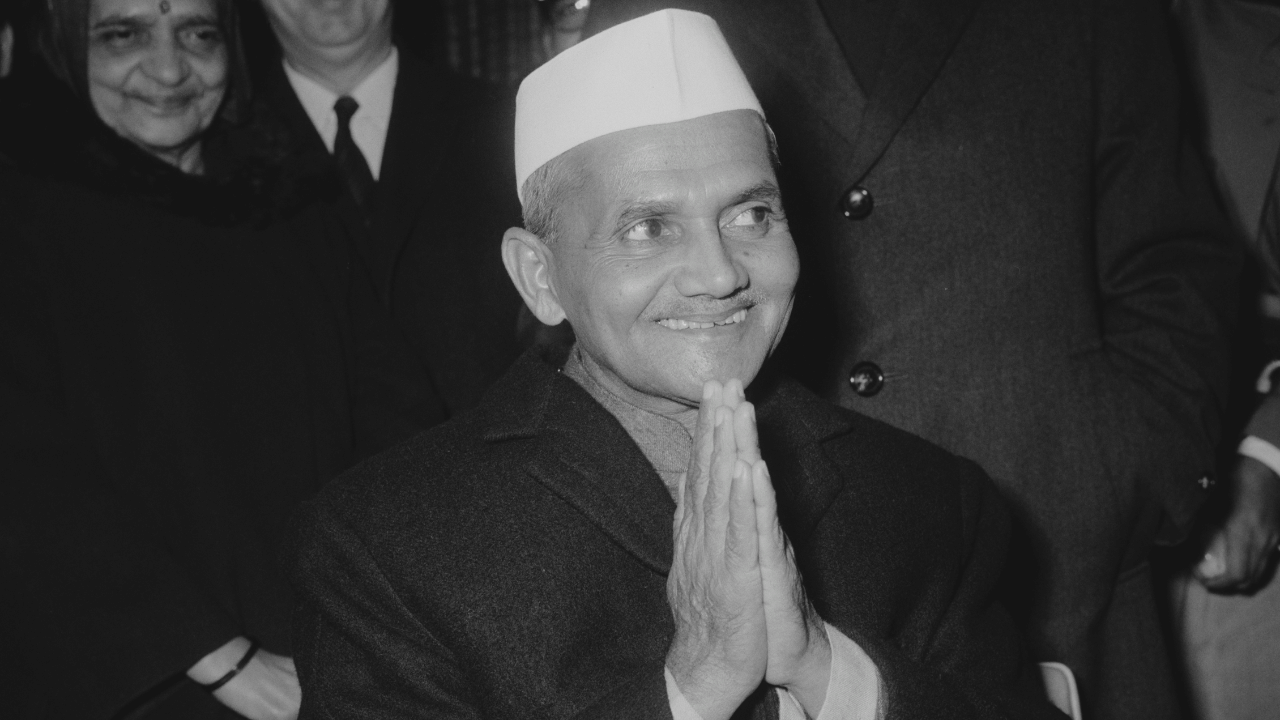
New Delhi: On January 11, the nation solemnly observes the death anniversary of Lal Bahadur Shastri, India’s second Prime Minister — a statesman whose life epitomised simplicity and integrity.
In stark contrast to the dazzling flamboyance of Jawaharlal Nehru, Shastri’s tenure was marked by humility, decisive leadership, and a commitment to the principles of democracy and development. Yet, his untimely death in Tashkent on the intervening night of January 10 and 11, 1966, remains a mystery that continues to haunt the collective conscience of the nation.
A leader of substance
Shastri’s leadership came at a critical juncture in India’s post-independence history. His tenure as Prime Minister, though brief at just 19 months, was transformative. He guided the nation through the 1965 India-Pakistan war, showcasing India’s military prowess for the first time. His slogan ‘Jai Jawan, Jai Kisan’ not only galvanised soldiers and farmers but also resonated with the aspirations of a young nation striving for self-reliance.



Under his leadership, India successfully countered Pakistan’s aggression in Kashmir in 1965. The Indian Army’s decisive advance into Pakistani territory, even reaching the outskirts of Lahore, was a testament to his unwavering resolve. This victory brought international recognition to India’s military capabilities and bolstered national morale.
To restore peace with Pakistan, Shastri traveled to Tashkent (now Uzbekistan), where the Soviet Union mediated a ceasefire between India and Pakistan. The Tashkent Agreement, signed on January 10, 1966, was meant to usher in a new era of peace. But instead, it turned out to be the backdrop for one of India’s most perplexing political mysteries.
Night of the tragedy
After signing the Tashkent Agreement, Shastri retired to his villa for the night. Reports suggest he had a modest dinner prepared by Jan Mohammad, the personal cook of TN Kaul, India’s then ambassador to Moscow. Around 11:30 pm, he was served a glass of milk.
A few hours later, at approximately 1:30 am, Shastri awoke coughing severely. His personal doctor, RN Chugh, was summoned, but by the time he arrived, Shastri was in his final moments.
The official cause of death, as reported by a joint medical investigation conducted by Soviet doctors and Dr. Chugh, was a heart attack (acute infarct miocarda). However, the circumstances surrounding his death raised more questions than answers.
‘Mere bitwa ko jahar de diya’
When Shastri’s body was brought back to Delhi, his mother exclaimed upon seeing the blue patches on his body, ‘Mere bitwa ko jahar de diya” (My son was poisoned). Witnesses noted cut marks on his stomach and the back of his neck, as well as bloodstains on the bedsheets, pillows, and even the cap he was wearing.
Despite these alarming observations, no postmortem was conducted — neither in the Soviet Union nor in India. This omission, along with other inconsistencies, has fueled suspicion for decades.
Unanswered questions
The events following Shastri’s death only deepened the mystery further. Jan Mohammad, the cook, who served the last meal to Shastri, found employment at Rashtrapati Bhavan. TN Kaul, the ambassador, was later promoted to foreign secretary. Dr. RN Chugh, Shastri’s trusted physician, tragically died in a truck accident under mysterious circumstances.
Why no postmortem was conducted to Shastri’s body? Why were key witnesses and individuals connected to the incident either silenced or relocated? These are questions that remain unanswered to this day.
Anil Shastri’s call for transparency
Shastri’s elder son, Anil Shastri, a senior Congress leader, has long been pressing for the declassification of documents related to his father’s death.
The demand for declassification is not merely about seeking justice for a family, in fact it is about addressing a wound in the nation’s psyche. Shastri was not only the Prime Minister, he was a symbol of India’s moral and ethical aspirations. The circumstances of his death, shrouded in secrecy, are an affront to the transparency and accountability that he championed.
The Tashkent Conundrum
In his book, Your Prime Minister is Dead, journalist Anuj Dhar delves into the murky waters surrounding Shastri’s death. Dhar meticulously examines the inconsistencies in the official narrative and raises pertinent questions about the role of international and domestic actors in the tragedy. The book serves as a compelling reminder of the need for a comprehensive and impartial investigation into the events of that fateful night.
Dhar’s research points to possible geopolitical motives behind Shastri’s death. The Tashkent Agreement, while celebrated as a diplomatic breakthrough, had its detractors. Could there have been forces — foreign or domestic — unwilling to see Shastri return to India as a hero?
A legacy tarnished by secrecy
Lal Bahadur Shastri’s life was a testament to simplicity, honesty, and dedication to public service. His untimely death, however, has cast a shadow over his legacy. The lack of transparency surrounding his demise not only dishonors his memory but also undermines public trust in the institutions tasked with safeguarding the nation’s history.
The mystery sorounding Shastri’s death is not merely a historical footnote. It is a reminder of the need for vigilance in the face of power and a call to uphold the values of accountability and justice.
Nation demands answers
January 11 is not just a day to remember Lal Bahadur Shastri’s contributions. In fact it is a day to reflect on the unfinished task of uncovering the truth about his death.
As we commemorate Shastri’s death anniversary, the demand for answers grows louder. Successive governments have refrained from addressing the mystery, citing reasons ranging from diplomatic sensitivities to national security concerns. However, in an era where transparency is increasingly valued, the continued suppression of truth is untenable.
Prime Minister Narendra Modi, who has often spoken of his admiration for Shastri, has a unique opportunity to rectify this historical injustice. By declassifying the relevant documents and initiating an independent inquiry, the Modi government can honor Shastri’s legacy and reaffirm the nation’s commitment to truth and justice.
(Saswat Panigrahi is a senior multimedia journalist.)