This website uses cookie or similar technologies, to enhance your browsing experience and provide personalised recommendations. By continuing to use our website, you agree to our Privacy Policy and Terms of Use.
Accept
IndiaPost LiveIndiaPost LiveIndiaPost Live
  • Home
  • India
  • World
  • Business
  • Entertainment
  • Sports
Notification Show More
Font ResizerAa
IndiaPost LiveIndiaPost Live
Font ResizerAa
  • Home
  • India
  • World
  • Business
  • Entertainment
  • Sports
  • India News
  • State
  • World
  • Entertainment
  • Business
  • Trending
  • Sports
  • Career
  • Lifestyle
  • Languages
Follow US
© 2024 NM Media. All Rights Reserved.

News » India News » Ancient DNA unlocks India’s Elephant kingdom secrets

India News

Ancient DNA unlocks India’s Elephant kingdom secrets

NM Desk
Last updated: 1 November, 2024 12:17 PM
NM Desk
Share
Ancient DNA unlocks India’s Elephant kingdom secrets

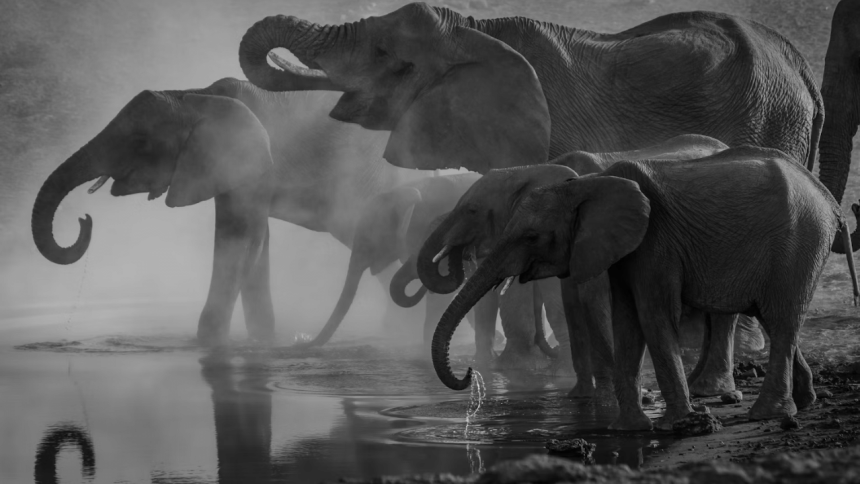
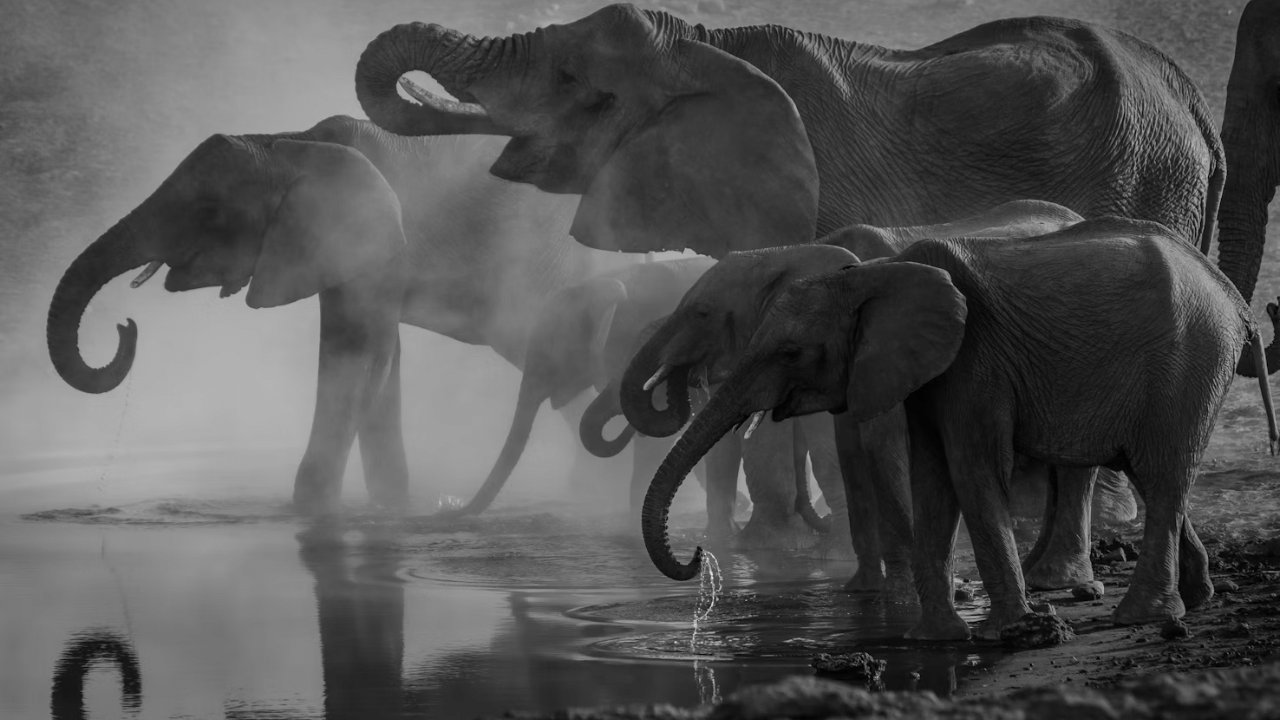
New Delhi: A new genomic analysis has identified five genetically diverse groups of Asian elephants in India, painting a picture of their long evolutionary history up to 70,000 years ago. A study conducted by the researchers from the National Centre for Biological Sciences (NCBS) and the Indian Institute of Sciences (IISc) brings out the fact that these populations share deep-rooted regional diversity and movements. This work will serve to enhance conservationism, especially in areas of population assessment and conflict solitaire in conflict-prone areas.

Contents
The Serial Founder Effect and the Ancient DivergenceConservation and Conflict Management Uses

The elephant populations of India are located in South and Southeast Asia with about 60% of the Asian elephants. A new study of the whole-genome sequencing of blood samples from wild-captive elephants in different regions of India has revealed five distinct populations of elephants in India, one in the north and central and three in the south. These findings support other research that indicated there are only three to four populations, and the new data reassigns the north/northeastern groups as one.

The study also looks at natural geographical features that may affect the dispersal of elephants in this region. Although the Palghat Gap has long been considered a geographical barrier to split species, the Shencottah Gap is now included as another barrier in southern India. This has resulted in small, genetically differentiated populations to the south of these gaps, especially the Shencottah Gap, which has a low gene pool and therefore may be more susceptible to environmental pressures.

Read More

Nagaland Lottery Result LIVE 25.09.2024: Dear Indus Winners, Prize Rs 1 Crore
UPY vs PP, BB vs TT: Pro Kabaddi League Live Streaming details for match 29 and 30
Engineer Rashid seeks bail in 2017 terror funding case; Delhi court seeks NIA’s response
Delhi court grants interim bail to MP Engineer Rashid till October 2

The Serial Founder Effect and the Ancient Divergence

The study revealed that elephants in India started diverging and moving at least tens of thousands of years ago. More specifically, while the population to the north of the Palghat Gap split from northeastern populations approximately 70,000 years ago, subsequent splits saw the elephants travelling and colonising new areas. This “serial founder effect,” characterised by low gene flow and the formation of smaller groups, has resulted in lower genetic variation in southern populations and, consequently, susceptibility to inbreeding.

Conservation and Conflict Management Uses

The study offers important information as to how conservation approaches can be enhanced. With a genetic map in hand, researchers can follow the routes that elephants take, understand the condition of their population, and identify the differences between them, which is vital for conservationists to determine which minor population deserves protection most of all. Aritra Kshettry, a conservation ecologist with WWF-India, explains that genomics has the capability to be used in population estimation, poaching control, and individual recognition. Furthermore, the study might reveal more information on management of human-elephant conflict since diffusion information on migration could be useful in conflict prevention.

Lead researchers believe that other genomic studies will keep on revealing the evolutionary history of Indian wildlife and hence aid in solving the problems of wildlife conservation and management of human-wildlife conflict.


You Might Also Like

Recent deaths of two Agniveers raises questions on scheme again: Rahul Gandhi

Toxic foam forms over Yamuna River ahead of Chhath puja, memes go viral

Nainital’s Metropole hotel complex temporarily allotted for parking, Union Home Ministry steps up to ease traffic woes

Kota man retires to care for sick wife, she passes away at his farewell party | Watch

Kumbh, Ganga, Jamuna, Basanti… 12 babies born at Maha Kumbh hospital

TAGGED:Asian elephant conservationAsian elephant populationselephant conservation Indiaelephant conservation prioritieselephant geneticselephant genome studyelephant history Indiaelephant inbreedingelephant migration patternselephant population estimationelephant population geneticsgenetic diversity elephantsgenetic populations of elephantshuman-elephant conflictIISc elephant researchIndia elephantsNCBS elephant studyPalghat Gap elephantsShencottah Gap elephantswildlife genomics
Share This Article
Facebook Twitter Whatsapp Whatsapp Telegram Copy Link

Latest News

image editor output image812472244 1770024678844
Singer Jasmeen Akhtar drops her latest single Malak Dyaal
Entertainment
IMG 20260202 WA0000
Indie Artist Prabhanjan Unveils First Look of His Upcoming Afro-Desi Single ‘Thugwa’
Entertainment
indiapost live
They have history and history of overlooking that as well: Jaishankar on Pak-US ties
India News
Centre conspiring to stop free ration of 55 lakh Punjabis: CM Bhagwant Mann
India News

You also Like

‘Rs 50cr wolfdog that never existed’: How an ED raid exposed Bengaluru dog breeder’s tall claims
India News

‘Rs 50cr wolfdog that never existed’: How an ED raid exposed Bengaluru dog breeder’s tall claims

NM Desk NM Desk 3 Min Read
‘Congress has been fighting RSS’ ideology for 1,000 years’, says Rahul Gandhi
India News

‘Congress has been fighting RSS’ ideology for 1,000 years’, says Rahul Gandhi

NM Desk NM Desk 4 Min Read
Breakfast in MP, lunch in Bihar & dinner in Assam: PM Modi visits 3 states in one day
India News

Breakfast in MP, lunch in Bihar & dinner in Assam: PM Modi visits 3 states in one day

NM Desk NM Desk 4 Min Read
IndiaPost LiveIndiaPost Live
Follow US
© 2024 NM Media. All Rights Reserved.
  • About Us
  • Privacy Policy
  • Contact Us
Welcome Back!

Sign in to your account